

With the continuous popularity of BUBBLEMON in domestic and international markets, a large number of high-grade replicas, clones, and even recycled counterfeit products have emerged. These knockoffs not only use cheap, low-grade flavorings and industrial solvents, but their internal batteries also lack overcharge protection, posing significant safety hazards. By mastering a few key visual details and official verification steps, you can quickly identify the real from the fake.
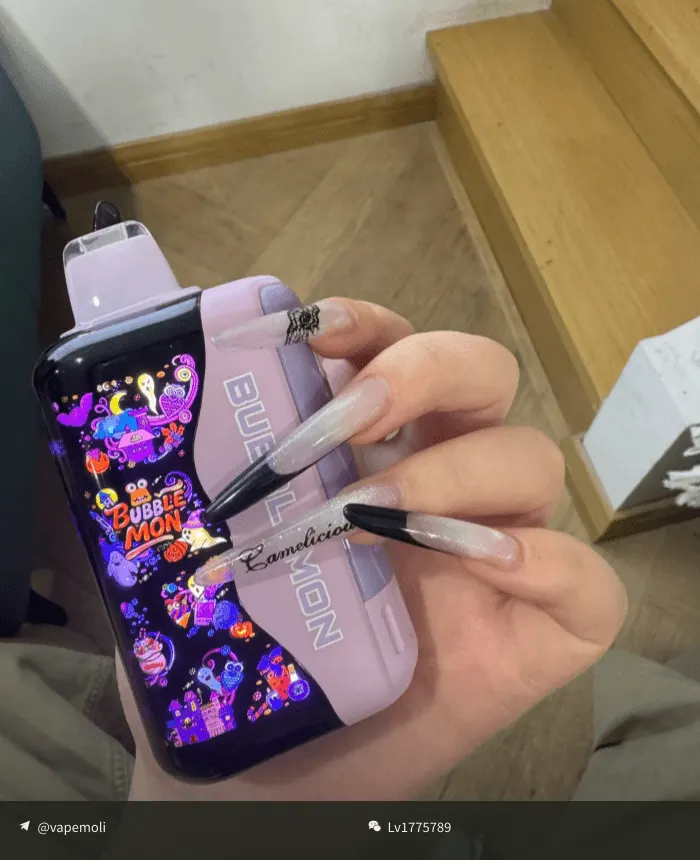
BUBBLEMON Authentic vs. Low-Grade Fake Comparison Table
There is a significant manufacturing gap between authentic units and low-grade fakes in tooling molds, industrial printing, and electronic components. The core differences are as follows:
| Comparison Dimension | Authentic BUBBLEMON Features | Low-Grade Counterfeit Features |
|---|---|---|
| Body Graffiti & Illustrations | Extremely high silkscreen precision, sharp micro-text and pattern edges, clear colors with no bleeding | Blurry printing, dull/grayish colors, merged fine lines, or even severe digital noise/grain |
| Side Lettering & Curved Fit | Tightly fitted frame, delicate rubberized or matte-painted texture, centered and neat LOGO engraving | Wide gaps with burrs, crooked printed letters, prone to peeling and flaking paint at the edges |
| Mouthpiece Material & Clarity | Food-grade high-transparency PCTG, smooth rounded chamfers, no condensate residue or impurities inside | Strong odor from recycled industrial plastics, yellowish/dark mouthpiece, rough parting lines that scratch the lips |
| Screen Animation & Indicators | (Gen 3) Full-color HD display, smooth dynamic UI transitions, accurate battery and e-liquid readings | Rough monochrome dot-matrix screen or cheap fake sticker screen, battery level stays falsely full permanently |
How to Check the BUBBLEMON Anti-Counterfeiting Code: Step-by-Step
- Check the Outer Box Coating Integrity: Authentic packaging boxes feature a dedicated anti-counterfeiting security seal on the side. Check whether the scratch-off layer has signs of being peeled, restuck, or previously scratched.
- Physically Scratch the Coating: Scratch off the security layer to reveal the unique security code characters and the corresponding dedicated QR code.
- Scan the Code and Verify the Official Domain: Use the native system camera or WeChat to scan the QR code. Be sure to carefully check whether the redirected website domain is the brand's official primary domain; never trust "knockoff verification pages" forged through unknown third-party short links.
- Check the Verification Response and Count: When verified for the first time, an authentic product will state: "The product you queried is authentic; this code is being verified for the first time," accompanied by an accurate timestamp of the first query. If it indicates "This code has been queried multiple times" or shows an abnormal query count, stop using it immediately and contact the seller for a refund.
Scent and Inhalation Experience as Secondary Verification
In addition to visual checks, when an authentic BUBBLEMON is first unsealed from its silicone plug, it emits a pure, natural fruity and minty aroma without any pungent or irritating chemical smell. During inhalation, the airflow resistance is tight and linear, delivering cold, smooth vapor. Counterfeits often have a noticeable burnt plastic smell or overly sweet artificial chemical flavors, accompanied by a harsh throat hit.
To distinguish between batch versions, verify authentic details, or explore first-hand sourcing channels, refer to other teardown reviews on this site or send a direct message for discussion.
Frequently Asked Questions (Q&A)
Q: Is the luminous/glow-in-the-dark illustration on the BUBBLEMON body exclusive to authentic units? A: Gen 3 products primarily rely on full-color dynamic backlit screens to deliver visual effects. Some low-grade counterfeits use fluorescent powder printing to mimic screen displays, glowing green in the dark rather than emitting clean screen backlighting; these can be directly identified as fakes.
Q: If the page redirected from the QR code looks very legitimate, could it still be a fake? A: Yes. Counterfeit workshops often build knockoff verification websites and generate matching fake QR codes. The key to verification lies in checking whether the primary domain at the top of the browser is the genuine official domain, rather than relying on the layout and appearance of the interface.